
The external condom
The external condom (also known as a “male condom”, “condom” or “rubber”) is a thin, flexible sheath that is placed over the penis. It can be made of latex or synthetic material.
How it works
Once in place, the external condom prevents direct contact between the penis and the mucous membranes (vulva, vagina, anus, rectum and mouth) and retains the semen.
When used correctly, the external condom is a method of preventing pregnancy and protecting against HIV/AIDS and reduces the risk of other sexually transmitted infections (STIs).
How to use it
Choosing and storing an external condom properly
There are different sizes of external condoms. The width and shape should be suited to the anatomy of the penis for comfort and safety (to reduce the risk of tearing or slipping).
Further information: www.mysize.ch
- Only use good quality condoms bearing the “OK” or “CE” label.
- Make sure the packaging is not damaged. Do not leave them in direct sunlight or in your wallet. If possible, they should be carried in a box.
- Do not use condoms after the expiry date.
- If you have a latex allergy, latex-free condoms are available. If in doubt, ask for advice at a pharmacy or specialist shop, or read the package leaflet.
Instructions for use
Use a condom for the full duration of sexual intercourse, and not only immediately before ejaculation. Even before penetration, pre-ejaculatory fluid at the tip of the penis may already contain sperm cells or infectious agents.
1. Carefully tear open the wrapper at the notch and remove the condom. Warning: the condom may be damaged by sharp objects/fingernails or by using teeth to open the wrapper.
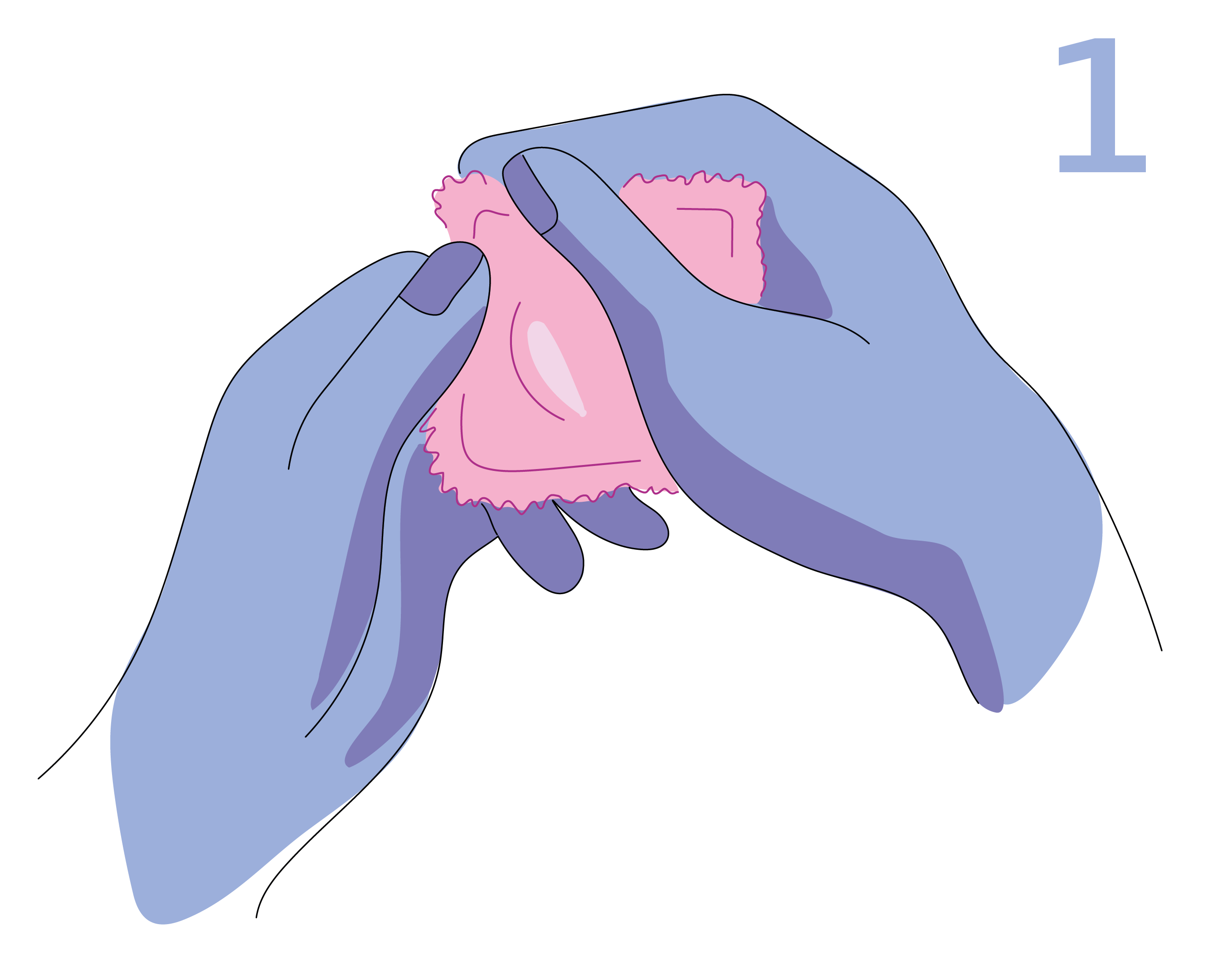
2. Pull back the foreskin (if present) covering the glans. Hold the condom by the tip between your thumb and index finger. Place it on the penis, with the rubber ring facing outward. This keeps the reservoir empty and leaves room for semen.
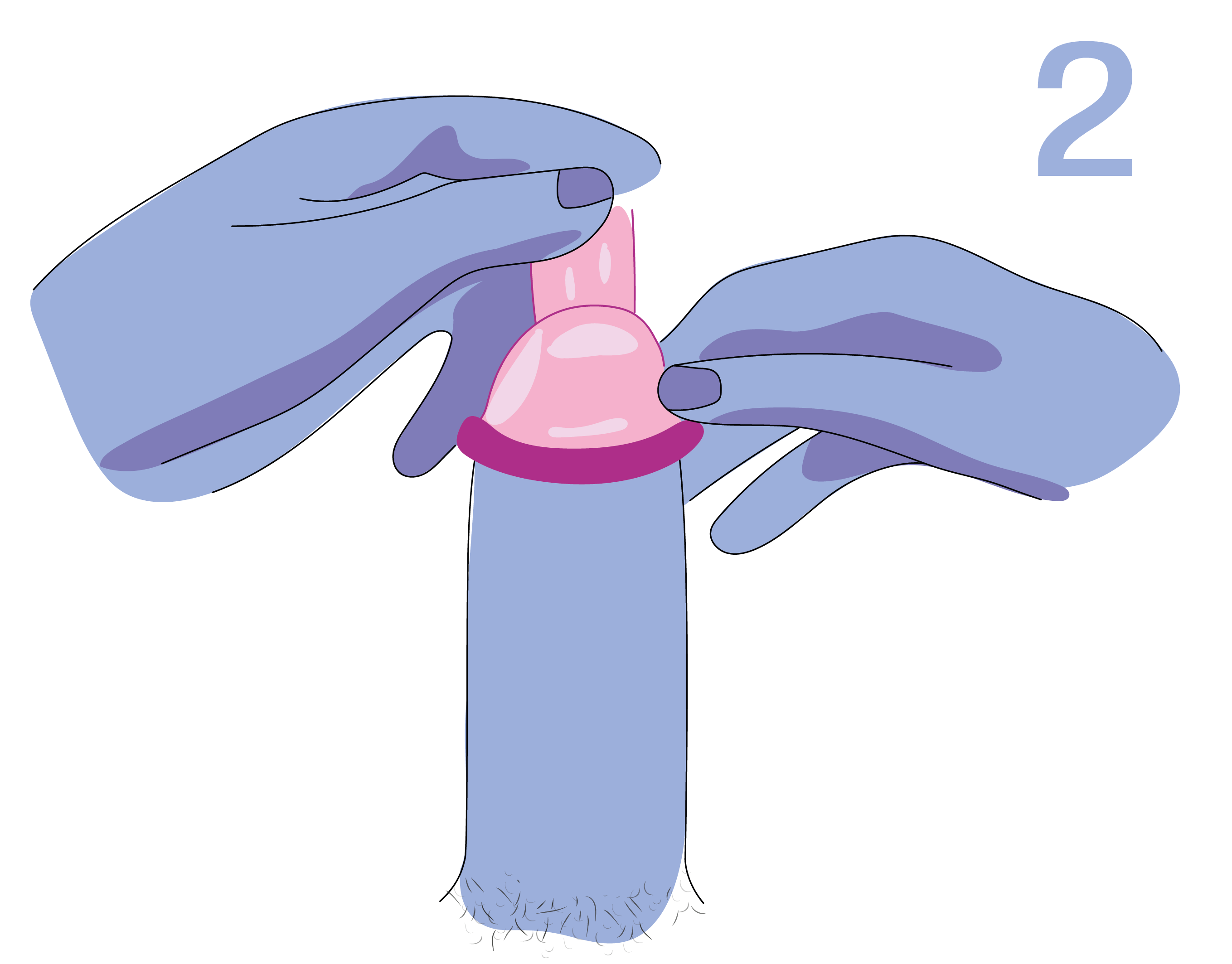
3. Roll the condom downwards.
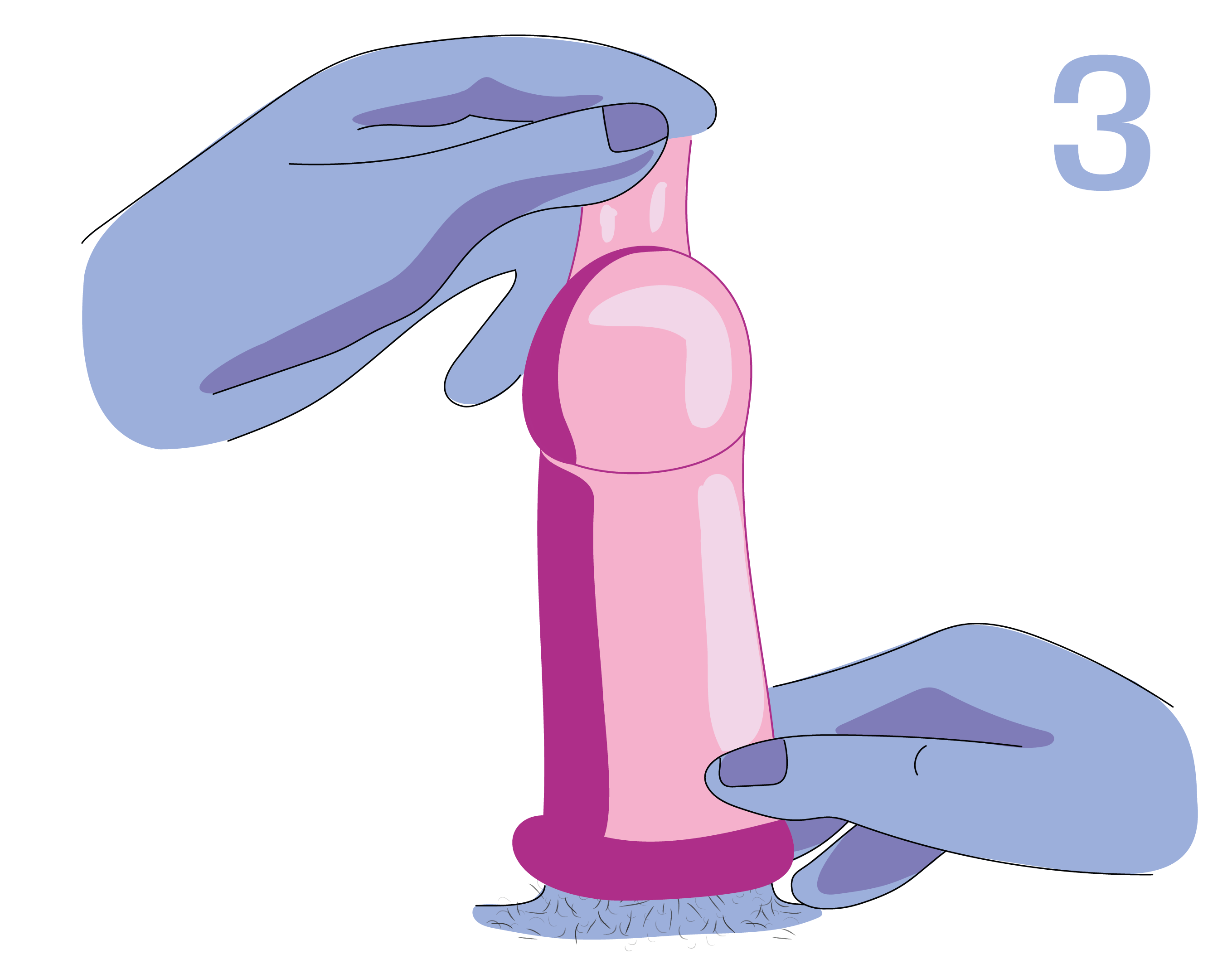
During intercourse, regularly check that the condom is still properly in place and intact.
After ejaculation, withdraw the penis with the condom still on, before the erection subsides. The condom must be held firmly between your thumb and index finger while withdrawing it.
After use, check that the condom is still intact (pay attention to any tears). Dispose of it in the rubbish bin, not in the toilet. Do not use the condom more than once.
What to do…
... if the condom gets torn, slips off or is not used (correctly)
In order to prevent pregnancy, it is advisable to take emergency contraception as soon as possible (no more than 120 hours after intercourse).
Further information: Emergency contraception
If there is a risk of HIV transmission, it is possible to obtain emergency treatment (post-exposure prophylaxis, HIV PEP). To effectively reduce the risk of HIV transmission, this treatment should be taken as soon as possible (no more than 48 hours after intercourse).
Further information: Sexually transmitted infections
Good to know
- Do not use an internal and an external condom at the same time: friction can damage them.
- Lubricants: use water-based or silicone-based lubricants. Oil-based products (Vaseline, oils, margarine), spermicides and treatments for fungal infections or warts can damage the latex in condoms. If you are using vaginal or anal treatment in the form of a cream or suppository, ask your doctor whether this is compatible with condom use. Otherwise, avoid sexual intercourse for the duration of treatment.
- The best way to protect yourself against HIV or other STIs is to follow safer sex recommendations. One recommendation is to use condoms for vaginal or anal intercourse.
- STIs can be transmitted as a result of sharing sex toys. Therefore: use a different condom on the sex toy for each partner or orifice, and disinfect sex toys regularly.
For more information, visit the website www.lovelife.ch and take the Safer Sex Check.
Information
Written by: 2026, SANTÉ SEXUELLE SUISSE, Swiss foundation for sexual and reproductive health; ALECSS, Association suisse latine des spécialistes en santé sexuelle, Éducation – Formation – Conseil; faseg, Fachverband sexuelle Gesundheit in Beratung und Bildung
Medical review of the original text (French): Dr Sara Arsever (University of Geneva, HUG)
Medical copy editing of the translation (English): Dr. Julius Obinna Ugwu, MD (Doctor of Medicine)
Content produced with support from the Swiss Federal Office of Public Health (FOPH).
Further information on the topic
- Non-hormonal methods of contraception
- The transdermal patch (skin patch)
- The diaphragm (or cap)
- The internal condom
- Benzaltex Spermicide
- The coil (copper; or hormonal)
- Implant under the skin
- The quarterly injection
- Less reliable contraceptive methods
- Natural methods of birth control
- Sterilisation
- Male contraception
- The progesterone-only pill (mini-pill)
- The combined pill (oestrogen and progestogen) with a break
- Emergency contraception
- Vaginal ring
- The estrogen and progestogen pill taken without interruption